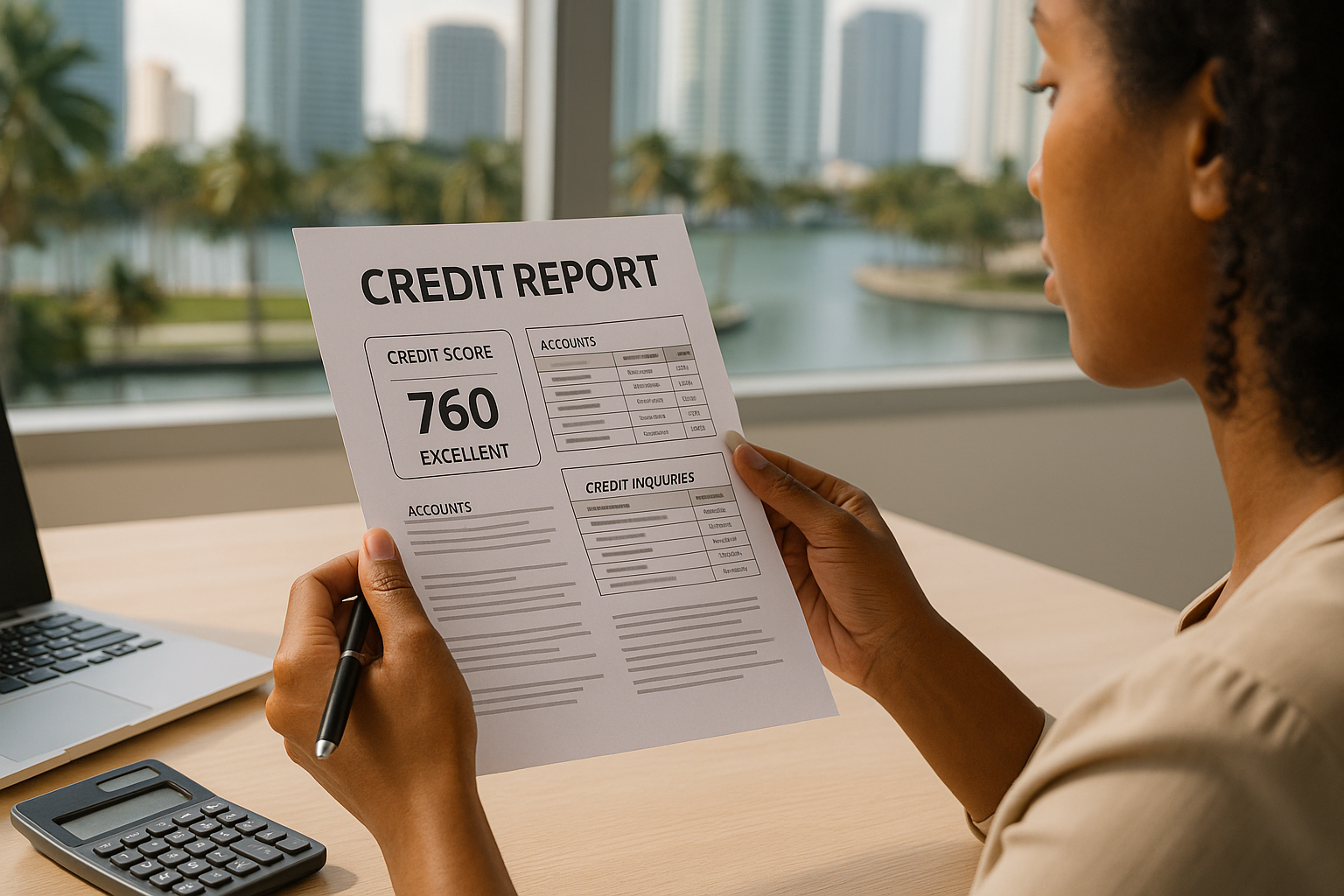
Understanding your credit report is crucial for anyone looking to build or maintain their credit score—especially for those living in a vibrant city like Miami, where having good credit can open doors to better housing, car loans, and even job opportunities. But if you’ve never taken the time to read your credit report, it can seem a bit overwhelming. Let’s break it down into manageable sections so you can feel confident navigating your credit report like a pro.
What is a Credit Report?
Your credit report is essentially a snapshot of your credit history. It includes details such as your credit accounts, payment history, the length of your credit history, and any public records like bankruptcies or liens. In Miami, where the cost of living can be high, a solid credit report can help you secure better rental agreements or lower interest rates on loans. Credit reports are compiled by major credit bureaus—Equifax, Experian, and TransUnion. Each bureau may have slightly different information, so it’s a good practice to check all three regularly; you can get them free every week at AnnualCreditReport.com.
Key Sections of Your Credit Report
1. **Personal Information**: This section includes your name, address, Social Security number, and employment history. Ensure that all information is accurate. Any discrepancies can affect your creditworthiness. 2. **Credit Accounts**: Here, you’ll find details about your credit cards, loans, and other credit accounts. Look for the account status (open, closed, paid, or in collections) and the payment history. This section is vital because it shows lenders how responsibly you’ve managed your accounts. 3. **Inquiries**: This section lists the companies that have requested your credit report. There are two types of inquiries: hard inquiries (which can impact your score) and soft inquiries (which do not). If you’re shopping for a mortgage or car loan in Miami, aim to limit hard inquiries, as multiple requests can lower your score. 4. **Public Records**: Any legal judgments, bankruptcies, or tax liens will appear here. It’s important to check this section for accuracy, as errors can greatly impact your credit score. 5. **Collections**: If you have any accounts that have gone to collections, they will be listed here. Addressing these accounts as soon as possible can help improve your credit standing.
How to Dispute Errors
If you find inaccuracies in your credit report, don’t panic! You can dispute errors directly with the credit bureaus. Gather any supporting documents and submit your dispute online or via mail. Under federal law, the bureaus have to investigate and respond to your dispute, typically within 30 days. Keeping your credit report accurate is essential for your financial health, especially in a bustling market like Miami.
Why Monitoring Your Credit is Important
Regularly monitoring your credit report can help you catch errors before they become bigger issues. It also allows you to see how your financial habits are affecting your credit score over time. For Miami residents, being proactive about your credit can lead to better opportunities, whether you’re looking to rent an apartment in South Beach or finance a new car. As you work on building your credit, remember that AreliScore can help you detect and record your on-time rent and utility payments, so you have a documented payment history to build on. By taking these steps, you’re on your way to understanding and improving your credit report—one step closer to achieving your financial goals!
Leave a Reply